Understanding Electric Fireplace Flame Technology
Understanding Electric Fireplace Flame Technology
2D, 3D LED, LCD and Holographic Flames Explained
Electric fireplaces now offer a wide range of flame technologies, each creating ambience in different ways. From simple flat flame visuals to advanced projection systems, understanding how these technologies work helps set realistic expectations and ensures you choose the right fire for your home.
This guide explains the key differences between 2D LED, 3D LED, LCD (screen-based), and holographic/projection flame systems, and how each creates its flame effect.
1) 2D LED Flame Effects
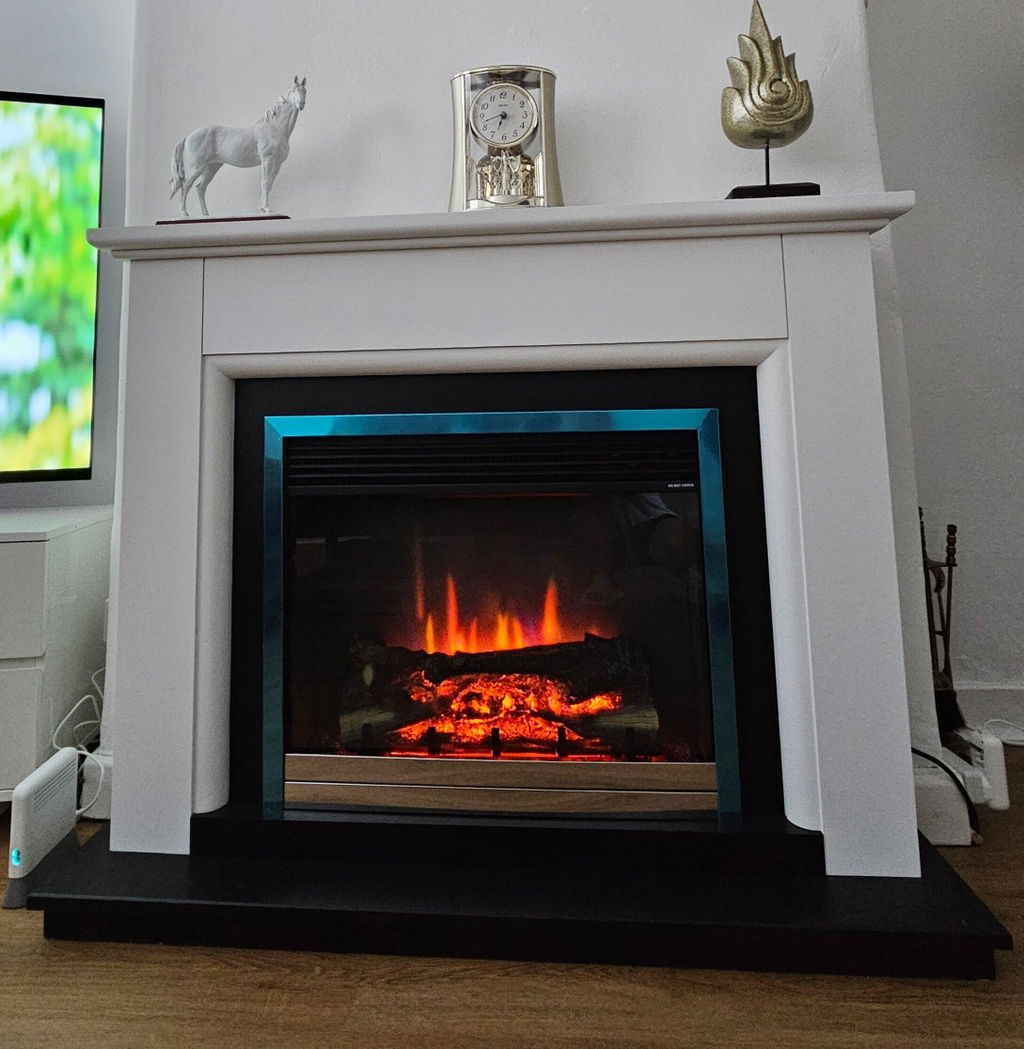
A 2D LED flame effect uses a single, flat visual flame display positioned behind the fuel bed. The flame image appears on one rear plane and provides a clean, consistent flame picture.
Key characteristics
- Rear-positioned flame display (behind the fuel bed)
- Flat, single-plane flame image
- Minimal visual depth
- Consistent flame pattern
- Often paired with logs, coals, or crystals placed in front
2) 3D LED Flame Effects
A 3D LED flame effect is also positioned behind the fuel bed, but is designed to create the appearance of greater depth and movement within the flame picture compared to standard 2D flames.
Rather than changing where the flame originates, the 3D effect is achieved through a combination of layered lighting, animated visuals, reflections within the firebox, and (on many models) an illuminated ember or fuel bed with logs or crystals placed in front.
Key characteristics
- Rear-positioned LED flame display (behind the fuel bed)
- Enhanced visual depth compared to 2D flames
- More dynamic flame movement
- Adjustable flame colours and brightness on many models
- Ember or fuel bed illumination can add visual warmth (model dependent)
Important: 3D LED flame effects are still visual LED displays. They do not involve real flames, combustion, holographic projection, or flames physically originating from beneath the logs unless explicitly stated for a specific technology.
3) LCD or Screen-Based Flame Systems
Some electric fires use LCD or digital screen-based flame systems (for example, models similar in concept to the TruFlame 150DX). These fires feature a high-definition screen positioned at the rear of the firebox that displays flame animations.
Key characteristics
- Rear-positioned LCD or digital screen
- Crisp, high-definition flame visuals
- Smooth, consistent animation
- Often combined with illuminated fuel beds and logs
While screen-based systems can appear very sharp and detailed, the flame image remains on a single rear plane. Any sense of depth is created visually through animation and lighting rather than physical flame placement.
4) Holographic or Projection Flame Technology
Holographic or projection-based electric fireplaces represent one of the most advanced flame technologies currently available. Rather than using a flat LED or LCD display, these systems use digital projection techniques to create flame visuals that can appear suspended within the firebox.
Key characteristics
- Projected flame visuals rather than flat screens
- Flames can appear positioned within the firebox space
- Enhanced perception of separation and depth
- More immersive visual presentation
Projection-based systems are typically found in premium electric fireplaces and are designed for customers seeking a more visually complex flame presentation without the use of real combustion.
Quick Comparison
| Technology | Where the flame visual sits | Depth and movement | What it is |
|---|---|---|---|
| 2D LED | Behind the fuel bed | Basic | Single-plane LED flame display |
| 3D LED | Behind the fuel bed | Enhanced (visual layers) | LED flame display with layered lighting and reflections |
| LCD / Screen | Behind the fuel bed | Good (via animation) | High-definition digital screen flame animation |
| Holographic / Projection | Projected within the firebox space | Highest (most immersive) | Projection-based flame visuals within the firebox |
Final Clarification
Both 2D and 3D LED flame effects are positioned behind the fuel bed. The difference lies in how depth and movement are visually created, not where the flame originates.
If you would like help choosing the right flame technology for your space, contact us and we will point you to options that match your preferred look, installation type, and budget.